
Through out the courses of DLL program I have been working on on creating my innovation plan for blended learning. I am now in my fifth class of the program and reflection is needed from time to time. In just five classes I feel as though I have grown more as an educator then the past 14 years of my career. In 5302 Learning Mindset I developed a Growth Mindset Plan. I have used this for both teachers and students.
My goal with this presentation is not only to inform them on what a growth mindset is but to also help them explore where they are in their own learning mindset. I know that the growth mindset is not something that is developed over night. It takes practice and modeling. I have tried to model this in my everyday life through classes that I teach. I strive to push students to grow their own minds to become future minded thinkers. When I feel that they are not pushing themselves to their full potential I return or ask for further learning to be done by giving them a “Not Yet” feedback. This alone has pushed students to look for deeper understanding. That is my biggest hope from helping students develop future mindsets. Students will need to develop mindsets that can solve future problems and create new ideas.
The growth mindset was the first step in the process of developing my Innovation Plan for Blended Learning. In a blended learning environment having a growth mindset is great for personal growth. In a blended learning environment learning is individualized for students to show growth and authentic learning. The combination of the growth mindset and blended learning environment lends itself to developing a significant learning environment.
In developing a significant learning environment students can embrace the new age culture of learning. Take a look at how I plan on developing a significant learning environment further. With the change world of today, students need to be able to adapt and change with it. That is why developing such learning environments is important for the future of education.
In creating a significant learning environment I needed to have a little self exploration of my own learning. In a new age of learning how am I working to change my own learning as well as my students? Here I looked back at three ideas of thought Behaviorists, Cognitivist, and Constructivist. Where I found that I started out mostly as a cognitivist. It’s not to say that I was a bad teacher starting out. I would say that I didn’t know any better. By exploring with my own learning philosophy, I am able to create a foundation for all learning in my classroom. To take a further look and my own personal learning philosophy click here. This will be the foundation for my innovation plan and creating powerful learning environments.
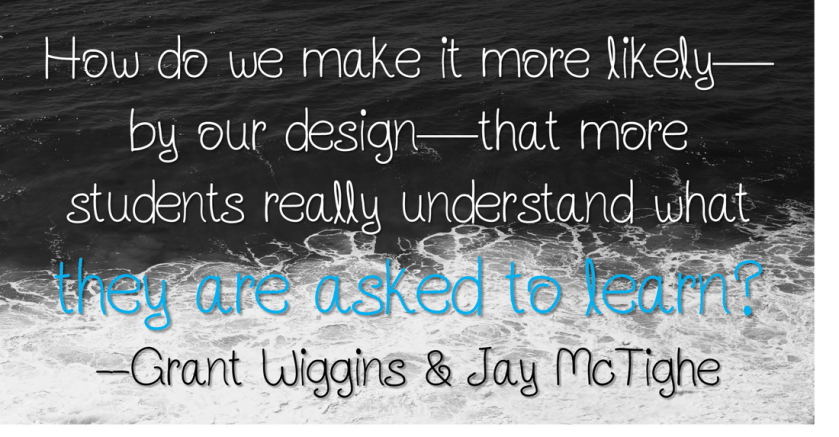
Now that I have a foundation of understanding my own learning and teaching. I need to look further into creating those significant learning environments. Two ways of creating lesson plans that fit with SLE are Fink’s 3-Column Table and Wiggins and McTighe’s Understanding by design. Both incorporate the backwards design and help create significant learning environments.
3-Column Table
Fink pushes educators to go beyond the content and develop learning for the sack of learning. Push students to have a deeper understand and reach a BHAG. In order to create such an environment, I needed to answer some questions. Fink has develop two worksheets to help teachers understand where they will be starting and where they will be finishing. Here is how I answered these questions in preparation for creating my 3-Column Table.
-
Formulating significant learning goals- Click Here
-
Learning Environment & Situational Factors to Consider – Click Here
These two worksheets are important in developing a 3-column table. Here is an example of what a 3-column table looks like. A 3-column table is wrapped around the BHAG. With out the BHAG there is no true direction for the lesson.
UbD
Understanding by Design was developed to have a very detailed format for lessons. Again this type of lesson format helps in developing a learning environment that students can have deeper understand and meaning. In order to compare the two formats I used the same lesson and goal. You can take a look at how my UbD lesson compares to a 3-Column Table.
No matter which template one decides to use both will push educators to think differently about how they design lessons for their classrooms. I look at them and see authentic learning for students. When developing my lessons for blended learning students will be given opportunities to show authentic learning. This will also help students understand the power of having a growth mindset.
Resources
Wiggins, G. P., & McTighe, J. (2008). Understanding by design. Association for Supervision and Curriculum Development.
Fink, L. D. (2003). A self-direct guide to designing course for significant
learning [Pamphlet]. San Francisco, CA
 leigh4education.school.blog