Growth Mindset For Future Thinkers

Screen Shot 2019-12-18 at 8.42.34 PM.png

Through out the courses of DLL program I have been working on on creating my innovation plan for blended learning.  I am now in my fifth class of the program and reflection is needed from time to time.   In just five classes I feel as though I have grown more as an educator then the past 14 years of my career.  In 5302 Learning Mindset I developed a Growth Mindset Plan.  I have used this for both teachers and students.

My goal with this presentation is not only to inform them on what a growth mindset is but to also help them explore where they are in their own learning mindset.  I know that the growth mindset is not something that is developed over night.  It takes practice and modeling.  I have tried to model this in my everyday life through classes that I teach.  I strive to push students to grow their own minds to become future minded thinkers. When I feel that they are not pushing themselves to their full potential I return or ask for further learning to be done by giving them a “Not Yet” feedback.  This alone has pushed students to look for deeper understanding.  That is my biggest hope from helping students develop future mindsets.  Students will need to develop mindsets that can solve future problems and create new ideas.
Screen Shot 2019-12-18 at 10.03.10 PM

The growth mindset was the first step in the process of developing my Innovation Plan for Blended Learning.  In a blended learning environment having a growth mindset is great for personal growth.  In a blended learning environment learning is individualized for students to show growth and authentic learning.  The combination of the growth mindset and blended learning environment lends itself to developing a significant learning environment.

In developing a significant learning environment students can embrace the new age culture of learning.  Take a look at how I plan on developing a significant learning environment further.  With the change world of today, students need to be able to adapt and change with it.  That is why developing such learning environments is important for the future of education.
Screen Shot 2019-12-19 at 2.25.53 PM.png

In creating a significant learning environment I needed to have a little self exploration of my own learning.  In a new age of learning how am I working to change my own learning as well as my students?  Here I looked back at three ideas of thought Behaviorists, Cognitivist, and Constructivist.  Where I found that I started out mostly as a cognitivist.  It’s not to say that I was a bad teacher starting out.  I would say that I didn’t know any better.  By exploring with my own learning philosophy, I am able to create a foundation for all learning in my classroom. To take a further look and my own personal learning philosophy click here.  This will be the foundation for my innovation plan and creating powerful learning environments.

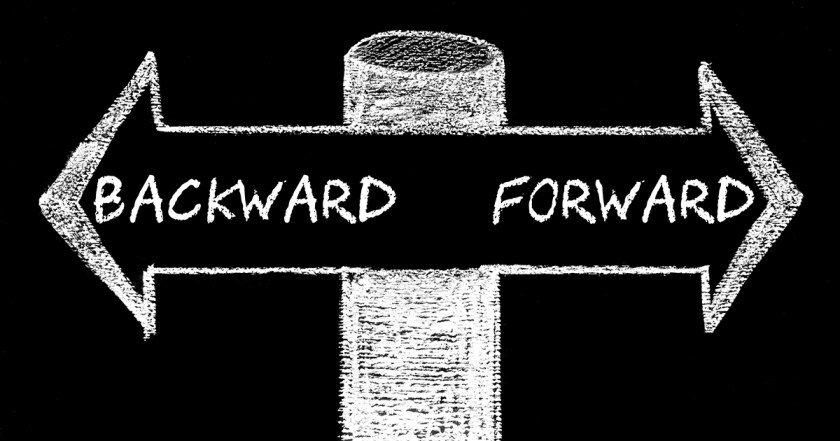
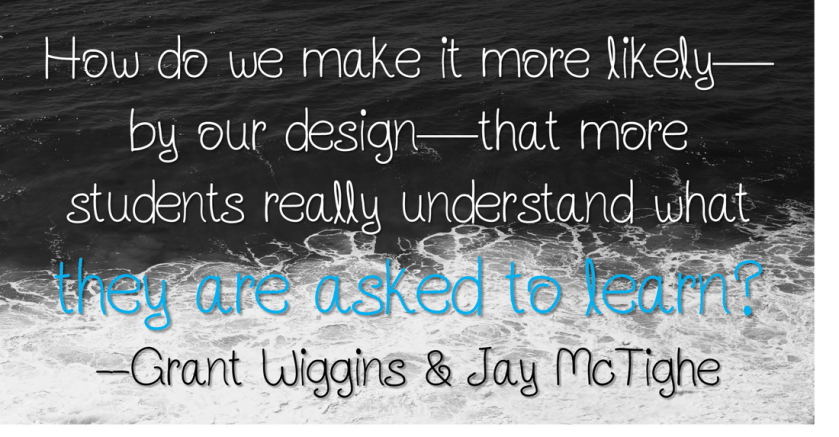
Now that I have a foundation of understanding my own learning and teaching.  I need to look further into creating those significant learning environments.  Two ways of creating lesson plans that fit with SLE are Fink’s 3-Column Table and Wiggins and McTighe’s Understanding by design.  Both incorporate the backwards design and help create significant learning environments.

3-Column Table

Fink pushes educators to go beyond the content and develop learning for the sack of learning.  Push students to have a deeper understand and reach a BHAG.  In order to create such an environment, I needed to answer some questions.  Fink has develop two worksheets to help teachers understand where they will be starting and where they will be finishing.  Here is how I answered these questions in preparation for creating my 3-Column Table.

  • Formulating significant learning goals- Click Here

  • Learning Environment & Situational Factors to Consider – Click Here

These two worksheets are important in developing a 3-column table.  Here is an example of what a 3-column table looks like.  A 3-column table is wrapped around the BHAG.  With out the BHAG there is no true direction for the lesson.

UbD

Understanding by Design was developed to have a very detailed format for lessons.  Again this type of lesson format helps in developing a learning environment that students can have deeper understand and meaning. In order to compare the two formats I used the same lesson and goal.  You can take a look at how my UbD lesson compares to a 3-Column Table.

No matter which template one decides to use both will push educators to think differently about how they design lessons for their classrooms.  I look at them and see authentic learning for students.  When developing my lessons for blended learning students will be given opportunities to show authentic learning.  This will also help students understand the power of having a growth mindset.

Resources

Wiggins, G. P., & McTighe, J. (2008). Understanding by design. Association for Supervision and Curriculum Development.

Fink, L. D. (2003). A self-direct guide to designing course for significant
learning [Pamphlet]. San Francisco, CA


UbD Lesson Design

backwards-design-lesson-planning.jpg

Teaching is an art.  I have been teaching for the past 14 years and have worked with different lesson templates.  From Marzano’s intentional thinking map’s, Fink’s 3 column table, and now UbD lesson design.  Creating an effective lesson for the classroom can be daunting to say the least.

UbD Design

The UbD lesson design is very detailed and very organized.

Step I: Desired Results – First I started out by creating a goal.  This is different from my course standards or my state standards.  My goal is important for understanding the overall outcome that I am wanting from my students.  In this step I am looking at making connections to my goal.  The next thing that I think is important in this step is creating essential questions.  You need to have essential questions that can drive student learning towards the over all goal.  Next is writing out specifically what students will know and be able to do.  These statements again will point back to the goal that was laid out at the begin of this step. On to Step II.

Step II: Assessment Evidence – In step two it is important that I now look at how I am going to assess learning.  What is it that I am going to be looking for.  What type of assessment platforms will I use.  In UbD assessment is broken into two phases.  Performance task and other evidence.  I look at performance tasks as what the students them selves will be creating or doing.  For example in my psychology class we have weekly discussions based around the unit’s concepts.  I assess students learning through their discussions and over all understanding of those concepts.  In the other evidence category I placed my formative assessment quizzes.  I use these to gauge my own teaching as much as my own student’s learning.

Step III: Learning Plan – In this step I am laying out all the moving parts of the unit.  Here I am trying to fill in the W.H.E.R.E.T.O acronym.  Think of this as a road map to lesson success.  By making sure that these letters are each developed around the goal, I can be sure that my lessons will be well rounded and effective.

You can find my lesson create with the UbD template at the bottom of this blog.  You can also click here to see my 3 Column Table based on Fink’s design.  I used the same course content for both.

Comparing UbD to 3 Column Table

Let’s compare last week’s design to this week’s design.  In Fink’s 3 column table I like the simplicity of its design. I found his design to be more troublesome in my own thinking.  I struggled to be able to develop those extremely focused ideas that the 3 column table requires.

In the UbD design you can clearly see that this design is much longer and more specific in certain areas like Step III.  That is why it is broken down into 4 unit lessons rather than one single page like the 3 column table.  I gravitated to this design easier than I did the 3 column table.  I think it is easier in the way that I was taught to write lessons.  One thing that I worry about with the UbD design is flexibility.  How flexible is it or will teachers be?  When things don’t go as planned will teachers be able to adjust? Also is the 3 Column table better when thinking about giving students a clean slate to learn.  The UbD platform seems so specific and may be too specific that it takes away the creativity of the students.

Over all both designs require the teachers to deconstruct how they think about the students learning.  If I had to choose one today, I would choose UbD.  I find it to be easier in my own way of thinking when it comes to teaching.  I like the laid out plan and step by step template.  With more practice I could really see my self using this lesson design platform.

UbD Psychology Lessons

Resources

Wiggins, G. P., & McTighe, J. (2008). Understanding by design. Association for Supervision and Curriculum Development.

The Three Column Table

When thinking about developing a game plan for teaching. I have to admit this is one of my weakest areas.  I started to read this weeks reading A Self-Directed Guide to Designing Courses for Significant Learning by L. Dee Fink, and learned that one must start with the end in site.  I must say that there have been times when the end was not always in site when creating units.

It is important as an educator that I create significant learning environments.  In order to do that effectively I need to understand what I what in the end for my students.  That is easier said than done. I, like most teachers were taught to how to write lessons but not in the way that Fink describes.

When looking at significant learning environments one must first start at the end.  In order to do this Fink has developed some helpful worksheets that can help get those thoughts written down.

gwjm_orig.png

First Step: Consider the Situational Factors

So first I took a look at the situational factors.  Here I was able to look at the course carefully.  In this step I was able to look at the situational factors that are present for the course.  Some of the factors are more important than others.  Some factors will play a more specific role in the creation of the class while others will play a limited role.

The general categories that Fink found useful to consider are the following:

• Specific Context of the Teaching/Learning Situation

• General Context of the Learning Situation

• Nature of the Subject

• Characteristics of the Learners

• Characteristics of the Teacher

To read more about my Situational Factors Click Here.

Second Step:Questions for Formulating Significant Learning Goals

The second step of this process was the most difficult part for me.  This is not something that I am accustomed to doing.  This step really made me think about what was important in this course.  How do I want this course to be developed?  I know what I teach but in the end I need to know what I want my students to know.

To read more about my Significant Learning Goals Click Here.

Step Three: Creating a Three Table Column

By using Fink’s self directed outline I came up with this three table column.


Reference

Fink, L. D. (2003). A self-direct guide to designing course for significant
learning [Pamphlet]. San Francisco, CA
Learning Environment & Situational Factors to Consider

  1. Specific Context of the Teaching/Learning Situation

How many students are in the class?  Is the course primary, secondary, undergraduate, or graduate level?  How long and frequent are the class meetings?  How will the course be delivered: live, online, blended, flipped or in a classroom or lab?  What physical elements of the learning environment will affect the class? What technology, networking and access issues will affect the class?

22 secondary students in 1 section.

Students meet every day for 42 minutes.

Students will have a mixture of live and online learning in a blended learning form.

Students will receive information through google classroom.

  1. General Context of the Learning Situation

What learning expectations are placed on this course or curriculum by: the school, district, university, college and/or department?  the profession?  society? 

The purpose of this course is to introduce the high school student to the study of Psychology.

  • Create compelling questions representing key ideas within the disciplines.
  • Develop supporting questions that contribute to an inquiry and demonstrate how, through engaging source work, new compelling and supporting questions emerge.
  • Gather relevant information from multiple sources representing a wide range of views while using the origin, authority, structure, context, and corroborative value of the sources to guide the selection.
  • Evaluate the credibility of a source by examining how experts value the source.
  • Construct arguments using precise and knowledgeable claims, with evidence from multiple sources, while acknowledging counterclaims and evidentiary weaknesses.


  1. Nature of the Subject

Is this subject primarily theoretical, practical, or a combination?  Is the subject primarily convergent or divergent?  Are there important changes or controversies occurring within the field?

Students will be shown both the theoretical and practical practices of psychology.  

  1. Characteristics of the Learners

What is the life situation of the learners (e.g., socio-economic, cultural, personal, family, professional goals)?  What prior knowledge, experiences, and initial feelings do students usually have about this subject?  What are their learning goals and expectations?

Students will assess how psychology can be applied to a wide range of areas in their lives.  Students need not have any prior knowledge about psychology.  Their past experiences will be used to make connections to psychological principles and concepts.

  1. Characteristics of the Teacher

What beliefs and values does the teacher have about teaching and learning?  What is his/her attitude toward:  the subject? students? What level of knowledge or familiarity does s/he have with this subject?  What are his/her strengths in teaching?

As the teacher of this course for several years, I feel it is important that all students have a basic understanding of psychology.  The reason being is that no matter what area of education they plan on following psychology will play a part.  It is my belief that students need to have a basic understanding of psychological concepts better help them understand how they learn and others around them learn as well.

Formulating Significant Learning Goals

Questions for Formulating Significant Learning Goals

“A year (or more) after this course is over, I want and hope that students will be able to apply basic psychological concepts in their daily lives.

My Big Harry Audacious Goal (BHAG) for the course is:  

Students will be able to create an understanding of how psychology can be applied in everyday life.  They will apply this understanding throughout the course by applying concepts to real life experiences.

Foundational Knowledge

  • What key information (e.g., facts, terms, formulae, concepts, principles, relationships, etc.) is/are important for students to understand and remember in the future?
  • What key ideas (or perspectives) are important for students to understand in this course?

Be able to identify early founders of psychology and their concept contributions to the field of psychology.

Be able to recall concepts like Behaviorism, Gestalt Principles, Sensation, Perception, Cognitivism, Nature vs. Nurture, and Functionalism.

Application Goals

  • What kinds of thinking are important for students to learn?
  • Critical thinking, in which students analyze and evaluate
  • Creative thinking, in which students imagine and create
  • Practical thinking, in which students solve problems and make decisions
  • What important skills do students need to gain?
  • Do students need to learn how to manage complex projects?

Students will be asked to think critically as to how psychological concepts can be applied to their everyday life.

Students will be able to use creative thinking by showing learning of psychological concepts through complex projects.

Students will also develop important skills through the use of technology. 

Integration Goals

  • What connections (similarities and interactions) should students recognize and make…:
  • Among ideas within this course?
  • Among the information, ideas, and perspectives in this course and those in other courses or areas?
  • Among material in this course and the students’ own personal, social, and/or work life?

Students will be able discuss how cultures can impact a person’s psychological makeup and understanding.

Students will be able to make connections to their own personal and social lives. 

Human Dimensions Goals

  • What could or should students learn about themselves?
  • What could or should students learn about understanding others and/or interacting with them?

Students will develop a deeper understanding of their own psychological thinking.

Students can have deeper individual meaning to how they think, feel, and socialize in everyday life.

Caring Goals

  • What changes/values do you hope students will adopt?

            Feelings?

            Interests?

            Values?

It is my hope that students will develop a sense of compassion and empathy for all humans and all human differences.

It is my hope that students will see potential in psychology and its importance in their future.

“Learning-How-to-Learn” Goals

  • What would you like for students to learn about:
  • how to be good students in a course like this?
  • how to learn about this particular subject?
  • how to become a self-directed learner of this subject, i.e., having a learning agenda of what they need/want to learn, and a plan for learning it?

Being a good student is not about getting good grades but showing learning in an authentic way.

Students can learn how they see best fits their learning style.  They should venture into a wide range of primary and secondary sources to develop their learning.

Theory of Learning

What is your theory of learning as an educator?  That is a question that I have asked my-self several times over.  Learning can be demonstrated in many different ways.  Some of the different theories of learning that I have taken a look at are Behaviorist, Cognitivist, and Constructivist.  These are all theories of the 20th century.

20th Century Learning Theories

1. Behaviorism

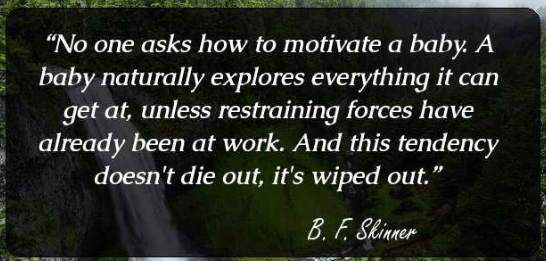
Behaviorist learning focuses on learning that can be observed and measurable.  Ivan Pavlov was one of the first to take a Behaviorist approach.  His learning theory became known as Classical Conditioning.  Another contributor to the Behaviorist theory was B.F. Skinner.  B.F. Skinner was different from classical conditioning.  His type of conditioning was Operant Conditioning.  One of the best examples of B.F. Skinner is this quote.

Screen Shot 2019-12-01 at 6.59.52 PM.png

I couldn’t agree more with this as a teacher.  Children are born with an ability to learn for the sake of learning.  Why does this disappear?  B.F. Skinner would look at the student’s behavior and observe over the years.  He would claim that Students are conditioned to stop wanting to learn in the ways that they are born.  Teaching is training for new behavior

2. Cognitivist

Learning here is the process of information.  This theory originated from the creation of the computer.  Like a computer Cognitivist look at how humans process and make meaning of information.  Information is processed into meaningful wholes that are connected to prior learning.  Through this form students are asked to make connection to past learning.  In this theory the students is only asked to learn what the teacher presents.  Teaching is a transmission of information to learners.

In looking at my past I would say that I first started out as a teacher in the cognitivist approach.  I spent a large amount of time creating lessons that were primarily teacher centered.  As I started to develop my own teaching style I started to move farther away from this approach.

3. Constructivist

Constructivist developed out of behaviorists and Cognitivists ideas.  In this theory learning is making meaning of doing.

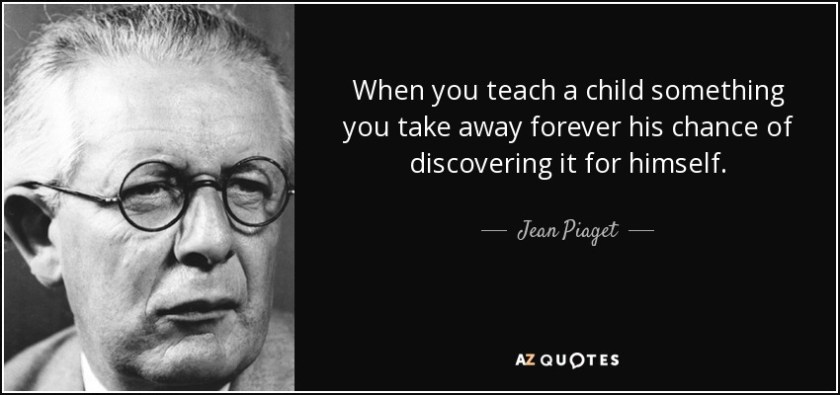
Jean Piaget.jpg

Jean Piaget’s quote is the embodiment of what he thought learning should be.  Students should be learning through exploration and self discovery. Teachers facilitate activities for students to make meaning. In this theory students fit into the idea of B.F. Skinner and the growth mindset.  Students explore and create their own meanings.

21st Century Learning Theories

1. Collaborativist

In this theory students focus on the knowledge building process. Collaborativism provides a learning theory and pedagogy that addresses 21st-century needs and opportunities. In an online world students work to build on the vast amounts of information that is provided further than the textbook.  Groups of students work together in order to develop their own set of understanding and learning.

2. Connectivist

In 2004 Stephen Downes and George Siemens pronounced this new age approach to learning. They argued that learning is a process of connecting with modes of information and that learning resides not only in the human learner but also in non-human appliances.

“it would flex and bend and reshape itself minute by minute according to where you are, who you’re with, what you’re doing, and would always have certain resources top of mind could be displayed in any environment or work area” Stephen Downes (Harasim, 2017)

So what is my philosophy of learning?

Early on in my career I would say that I was a Cognitivist. I spent days on end lecturing and expecting students to transfer that information back to me.  That is what I thought good social studies teachers did.  Over the past several years I have spent more of my time trying to develop more along the lines of Collaborativist and Connectivist.  This is also why I am trying to incorporate Blended Learning into my school district.  When I looked at the 21st century learning theories it couldn’t have fit any better with blended learning.

So what is my learning philosophy?  Just like blended learning I would like to think that it is a combination of several learning philosophies.  I know that I was once a Cognitivist and that I am trying to move closer to collaborativist and connectivist. So what does this look like.  It looks like creating an environment of learning where students work together collaboratively.  They look over a variety of materials trying to make connection to real life experiences.  I believe that these connections are the true future of education.  These ideas are built on the ideas of Piaget with constructivism.  By building a blended learning environment learning is turned back to the students.  Students are given the freedom to develop their own sense of learning.

That sense of learning goes along with my Significant Learning Environment.  As an educator I need to create the right environment for my students to be able to incorporate collaboration and making connections to learning.  In order to do that I need to understand my own learning.  I look back at some of my most meaningful learning experiences.  I think the key word is experiences. I spent many of days working in the garage with my father.  The relationship that was create in those hours of working in the garage helped develop my learning.  I think that is the next piece to my learning philosophy.  As an educator I need to continue to develop relationships with my students.  By building these relationships I can create the learning experiences that can be meaningful. By understanding my learning theory, I can reflect on my practice, improve upon, reshape and refine my work, and contribute to advancing my classroom.

Resources

Blake, B., & Pope, T. (n.d.). Developmental Psychology: Incorporating Piaget’s and Vygotsky’s Theories in Classrooms . Journal of Cross-Disciplinary Perspectives in Education 1(1), 59–67. Retrieved from https://tobh.pw/1560942072.pdf

This article discusses Jean Piaget and Lev Vygotsky theories of student learning and how they can be incorporated into the classroom.

Harasim, L. M. (2017). Learning theory and online technology: how new technologies are transforming learning opportunities. New York: Routledge.

In this book Harasim, looks at past theories from the 20th century Behaviorist, Cognitivist, and Constructivist.  It also looks into new learning theories like Collaborativist and Connectivist.


Significant Learning Environments

A New Culture of Learning

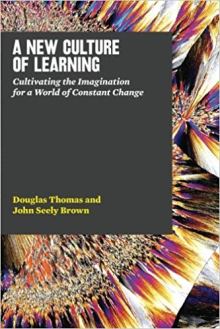
In the new world of technology learning has taken on a new look.  How can teachers embrace that new culture of learning?  More importantly what does this new culture of learning look like? Douglas Thomas author of A New Culture of Learning says

“In the new culture we describe, learning thus becomes a lifelong interest that is renewed and redefined on a continual basis. Furthermore, everything—and everyone—around us can be seen as resources for learning. To harness that new kind of learning and understand where we are now headed.”

Book Picture


To understand this new culture of learning lets look at the current culture of learning.  In the current culture of learning teachers are the main focus of learning.  Learning is transferred down from the teacher to the the students.  The students then are asked to transfer that learning back to the teacher in a form of assessments.  In this form of learning students are expected to learn what is taught and rarely given opportunities to divert from the teacher’s curriculum.  In this form of learning students have many boundaries and are asked to stay within those boundaries.

In the new age of learning Thomas, describes the classroom as a learning environment where teachers, students, technology, and boundaries all co-exist together.  In this new environment all these things are blended together in order to create a new sense of learning.  In this new culture students are not measured on regurgitated or transferred information rather the process of learning.  In this new form of learning-based approach the learning that students go through is the focal point .  Students strive in this environment to build upon learning.

Creating a Significant Learning Environment

Last year I took a new position as an instructional coach.  One of the first things that I did was go through training in student centered coaching.  This training opened up my eyes to creating a significant learning environment. Creating a significant learning environment is about keeping the student at the focus of learning.  This is what has driven me in my Innovation Plan.  I look forward to developing a blended learning environment.  I feel as thou the blended learning environment embodies a significant learning environment.

In creating a significant learning environment teachers take a look at the learning process. Has the student gone through the process of learning.  It’s not about developing the right multiple choice questions and regurgitating information back to the teacher.  It’s about creating a place for the students to struggle and develop in their own way.  Along with student growth comes student communication.  Students are asked to communicate amongst each other to help with their learning and challenge each other.  In this process it is not about the student just getting to the end, but how the student reached the end.

Now in the old form of learning students were given boundaries or constraints on learning.  These constraints often times limited the students growth and learning.  In a significant learning environment there are boundaries but those boundaries are expected to trigger the students imagination.  Students are asked to work with in the boundaries but push the limits of their own learning.  When students push the limits of their imagination and learning something beautiful happens.  Students begin to learn that growth comes with failure and struggle.  As students develop in their learning they begin to adapt and learning can really take place at the fore front.

This is one of the reason that I love blended learning.  Blended learning can be developed for each individual student.  Thats why building relationships with students is key in a significant learning environment.  Building relationships so that teachers know their students can help build these significant learning environments.

Challenges to Implementation

Challenge.jpg

In every organization there will be challenges.  As an instructional coach I have seen my fair share of challenges.  Maybe rather than calling them challengers I’ll call them resistors.  With in the blended learning model teachers are asked to rethink how they teach to students.  Creating a significant learning environment does the same thing.  It challenges the teacher to think about how they have been teaching for the past years. Those challenges to the teachers will be case for resistance.  In most cases it is resistance to the unknown.  That is why I will try to model, model, model.  Just like a car salesman running their buyers through all the bells and whistles on the car.  I need to sell to the teachers that they can’t live with out this in their classrooms.

With every new idea there have been naysayers.  People that thought they knew more than everyone else.  Ten years ago Steve Ballmer had this to say about the iPhone.

“Five hundred dollars, fully subsidized, with a plan?! I said, ‘That is the most expensive phone in the world! And it doesn’t appeal to business customers because it doesn’t have a keyboard!’” — Steve Ballmer, former Microsoft CEO

How wrong was he?  I know there will be naysayers in my organization.  I know there will be resistance to a blended learning environment.  It will be in the details of how I implement my ideas.  Knowing and trusting in the hours of research, discussions, and modeling I can feel confident in implementing blended learning.


Leading Change

Just the very word “CHANGE” can bring a system to the brink of turmoil.  So how can I create change in my district with out turmoil?  The answer is that most likely there will be turmoil along the way but having a plan before is key.  That plan all started with my Innovation Plan for bended learning.  While moving past my innovation plan I have now started to look at what obstacles innovators often times face.  True innovation will have obstacles.  How one deals with those obstacles can determine the success of your plan.


Why Before any organization can create change you have to know why.  The question of why drives everything.  These conversations must be had in order to have a strong understanding.  It isn’t enough to just know what you do and maybe how you do it.  You need to understand the “WHY“.  So in this course I worked to develop a strong why for blended learning.  So why blended learning?

influencer.jpeg

Next I need to understand what behaviors and actions are need for change.  One of the biggest things I learned is the power of the Influencer.  In this book I learn a number of strategies to help my district develop a plan to real create change.  Here is a detailed influencer plan for creating and sustaining change.  Changing behavior is where change really starts.  If you can change behaviors you have a chance at change taking form.


Untitled drawing (2)Next we are faced with the whirlwinds of every day life.  Teaching is a job that entails a large number of tasks during the day and week.  Its not just teaching your subject area.  The day to day grind of teaching can leave you unfocused.  This is where the 4DX model comes into play.  The 4DX model looks deeper into installing my innovation plan.    When looking at the 4DX model one must be extremely focused.  The 4DX model helps one do that with the whirlwinds of everyday life.

conversations.jpg

Conversations often times can arise that may be uncomfortable and stressful.  When creating change these types of conversations are likely to come up, but they don’t have to be uncomfortable or stressful.  Good leaders can install certain skills within its organization to help deal with these conversations.  In the Crucial Conversations leaders are taught how to deal with conversations of this nature.  Here is how I can utilize Crucial Conversations skills in the future.


Executing these can help a district like mine stay away from the pitfalls of change.


What makes up good leadership?

Having good leadership with-in any system is important.  Leadership is often times the glue that hold an organization together.  So what qualities does one need to have in order to be an effective leader?  One can do a quick search on google and find many words like Integrity, Motivate, Inspire, Confidence, Positive Attitude, and much more.  In this weeks discussions in class I looked at two characteristics that can not be over looked.

Self Differentiated

The first characteristic is being a self differentiated leader.  Edwin Friedman discusses this in his book A Failure of Nerve.  Being self differentiated leader means understanding your self and your own emotions.  When leaders are able to understand their own anxiety and emotions they can be an effective leader.  Friedman describes this as knowing were one begins and ends. A leader that has true understanding of themselves is able to connect with others but remain connected to them selves at the same time.  An effective leader doesn’t get sucked into the whirlwinds of the workplace, but stays strong in their own convictions.  A self differentiated leader has the ability to take a stand on issues or topics that have the ability to change their system.  They make tough decisions in the face of over whelming criticism.

For me as a leader one of the biggest things that I need to be on the look out for is Sabotage.  When one is being a self differentiated leader they are most likely going to see sabotage.  You will be see as a threat and those around you will try to sabotage what you are working on.  If this happens know that the process is working.  If you are truly self differentiated then you will be able to see that this is happening and be able to defuse the situation.

Crucial Conversations

The second characteristic is being able to have crucial conversations.  This is not your everyday conversation sitting around in the teacher lounge conversation.  This is a conversation that has opposing opinions, strong emotions, and high stakes.  These are the type of conversations that nobody wants to have.  In the end these are the types of conversations that need to be had if change is to be received and developed in your organization.  I believe that many of us have never been taught how to have these conversations. The book Crucial Conversations lays down a framework for how to have these conversations with in your organization.  By utilizing the process a leader can ensure a much more transparent workplace.  With transparency comes trust and understanding of what is going to happen.  As I move forward with blended learning in my school district, I know someone along the way will question it.  

Crucial Conversations Process


1. GET UNSTUCK

Too many times I have been in a conversation that just keep spinning its wheels.  The first thing when having a crucial conversation is understanding that you are stuck and now looking to figure out how to get past it.  With implementing blended learning in my school district I am sure that there will be difficult conversations ahead.


2. START WITH THE HEART

When those conversations come up and they will, you will need to ask yourself some questions.  You need to ask your self what your motives are and what do you want to accomplish with in the conversation.  Because if you allow your heart to take over in a conversation one might go down the wrong path in a conversation.  You need to make sure that your heart and your brain are both in focus.  For me I am passionate about blended learning and the necessity for it to be implemented with in my district.  I need to be careful not to fall into the trap of letting my heart run a conversation.


3. LEARN TO LOOK

This is one of those areas where you need to understand when the wheels are going to fall off.  The sooner that is done the sooner that the conversation can get back on track.  Things that need to be looked for….

  • When the conversation is becoming crucial
  • learn to watch for safety signs
  • watch for those becoming silent or violent

Understanding these signs are crucial for everyone involved in the process.  Emotions can run high but at the end of the day we all want what is best for students.  It is important that I understand these signs.


4. MAKE IT SAFE

When having a crucial conversation things can become heated and people may feel unsafe.  When the conversation has hit this point I need to step out and restore safety for all involved.  “It might be a good time to change gears for a second.”  This might be a way to have all involved reset for a second.  Once I am able to understand where the safety risk is address the risk and restore the safety of the conversation.  If apologies are needed then they should be done.  Everyone needs to have respect for each other.  People need to be able to feel safe to let down their guard when having these conversations.


5. MASTER MY STORIES

Whether you like it or not the story will be told.  Will you be in charge of your story?  Some times in the passions of conversation people get lost in their story. It is important that I don’t get lost in my story.  I am passionate about Blended Learning but that doesn’t mean that I can’t get lost in my own story.  At the same time having stories that corroborate my own is important.  Some times it is important to not only share your own story but others as well.  In order to keep the conversation on point don’t lose your way in your own story.


6. STATE MY PATH

  • Share your Facts
  • Tell your story
  • Ask for others paths
  • Talk tentatively
  • Encourage Testing

Following these steps allows your conversation to build and have structure in the toughest of moments.  Remembering these steps can help me follow an outline for success in these conversations.


7. EXPLORE OTHERS’ PATHS

How to listen when other blow up or clam up.   Knowing when to listen is just as important talking.  The trick here is not to get hurt while listening.  Understand what people are feeling and saying. Understanding that listening is sometimes the best way to persuading can be difficult.  Listening gives up a sense of control in the conversation.  Listen carefully and allow people to move to the roots of the problem.  This can help all move in the right direction.


7. MOVE TO ACTION

Remember getting unstuck, that was the whole purpose of the conversation.  Lets not have the same conversation again!  That was the goal at the start.  While having the conversation was probably not as comfortable as you would like, it was important in moving closer to real action.  By having these conversations you can move past the road blocks and get down to business.  I will be sure to write down our decisions and how we plan to move on. If similar issues arise around the same problem I will remind people of the last conversation and what we all decided on.  This can help keep everyone on track and in the groove.


I think that this is one of my weakest areas when leading.  I look forward to practicing these skills to better help me be a better leader.  If I can stay to the process described, I think that I can not only help myself but others in my district.


Resources:

Friedman, E. H. (2007). A Failure of Nerve: Leadership in the age of the quick fix

Patterson, K., Grenny, J., & Swizler, A. (2012). Crucial conversations: tools for talking when stakes are high

Less is more when it comes to change.

Untitled drawing (2)

This week I am looking more into developing effective strategies for implementing change.   Over the this course I have looked into the Influencer and now the 4DX models. Implementing change in a business or school takes planning.  When looking at implementing Blended Learning, the hustle and the bustle of the daily grind can get in the way.  According to The 4 Disciplines of Execution this is called the whirlwind.  So how can we do more with less?  I know that everyday teachers are all pulled into a hundred different directions.  So how does the 4DX strategy help do more with less? First I want to let you in on what to expect.

5 Stages of Change 

Stage 1: Getting Clear

As instructional coach in my district I am constantly working to help teachers create student centered classrooms.  One of the ways that I am looking to help implement student centered classrooms is through blended learning.  In stage one the goal must be focused.  In order to do this the TLC and IC will develop the first year WIG.  The focus must be crystal clear in order for it to be successful.

Other areas of concern:

  • Identify Lead Measures
  • Create a Scoreboard
  • Schedule a mutual time for weekly meetings

Stage 2: Launch

xtart

The TLC and IC will work together before the beginning of the year to develop a kickoff for our WIG.  This is crucial in gaining momentum and starting a sense of frenzy around the idea.  It will be up to me as the IC and leader to make sure that we remain focused and energized in our determination to reach our goal.  It will also be up to me as the IC to trust in the process that the team as created.

Stage 3: Adoption

Adopting a blended learning environment will take time.  The team needs to realize that small successes along the way are crucial in the process.  In order to be successful the team needs to be all in.  Know that there will be struggles along the way but as the plan begins to develop remember that we are in it for the long haul.  We will need to be focused more than ever.  We will need to make adjustments as need.  We will need to continue to support and hold each other accountable.

Stage 4: Optimization

In this stage we are “In It to Win It”.  We have seen the fruits of our labor at this point start to flourish.  Now we can trust even more in the process.  Each member of the team will start to live the teams WIG.  This stage is about encouragement and recognition.  Continue to encourage each other and at the same time recognize the work that need to still be done.

Stage 5: Habits

At this point we should be creating creatures of habit.  Our team should be creating daily and weekly routines that will help us reach our WIG.  They should start to see a cultural shift at this point.  They should also see themselves as pioneers of the school district that will be ready to lead the next years groups down the same path that they have just embarked on.

Implementing the 4DX Model

So what does the 4DX model look like?  Developing a model that can be successful is the struggle for any business or school looking to implement something of change.  The 4DX model was created in order to help people reach their Wildly Important Goal or WIG.  The 4DX model is broken down into four disciplines.

Discipline 1:Focus on the Wildly Important

Where people often times go array is focussing on too many ideas.  Thats not to say that the ideas are bad.  Most likely they are good ideas that could benefit everyone on involved.  How many times have we had discussions in our own faculty meetings but have never come to any specific goals.  Finding that specific goal is what discipline 1 is about.  When creating your Wildly Important Goal make sure to focus in on one to two goals.  Shooting for more than that is setting up failure.

WIG: The TLC and IC will implement one Blended Learning Unit by the end of 2020.

Discipline 2: Act on the Lead Measures

In discipline 2 one must find the leverage needed to move the WIG.  Finding the right leverage is key to success. This Lead Measure needs to be different from the Lag Measure.  Where the Lag Measure may seem like more common sense.  The Lead Measure is much more specific and leads to real success. Defining a Lead Measure needs to be predictable and influenceable.  It is important for the success of the WIG that all members of the team work together to create these measures. So with that being said these are some examples that I would guess we would come up with related to our WIG.  It is crucial that all members be involved or there is potential for members to not feel invested in the process.  Without that investment one is already setting up for failure.

Lag Measure: Develop Blended learning lessons

Lead Measure: Instructional Coach will work one on one with each member of the TLC team through a 6 week Coaching Cycle focused on blended learning.

Discipline 3: Keep a Compelling Score Board

Everyone needs to know what the score is.  When everyone knows what the score is everyone can understand where we are as a team.  Keeping score is important because it give more importance to the WIG.  With out the score board the WIG is likely to fail.  What does the scoreboard look like.  In this case it could be a poster in the teachers lounge keeping track of which teachers have met and gone through a coaching cycle.

Discipline 4: Create a Cadence of Accountability

In discipline 4 the team will create weekly agendas.  These agendas will keep us accountable to each other.  This gives each one of us a sense of value and accountability to each other.  By meeting on a weekly basis this set up a standard that the WIG is important.  This will help in the whirlwind of everything else that must be done during the work week.  Weekly meeting notes can be looked at to celebrate any successes from last weeks agenda.  What commitments were accomplished and which ones weren’t and why?  The WIG is constantly at the for front each week.  Unlike monthly faculty meetings where we get little time to work, weekly meeting can make a huge change.  Each week we can look at the scoreboard to see what needs to be done to score more and access our success.

Influencer vs 4DX

How does the influencer and the 4DX compare or work together.  The influencer develops around the emotional drive of several different people.  On the other hand the 4DX model looks to be more of a strategy based program.   The 4DX model takes the Influencer and pushes you past basic and more towards defined.  4DX has a more defined program and really takes you through the process of implementing a goal and working towards that goal.  The influencer works at getting that goal started and 4DX will help us through the entire process.  4DX really pushes that less is more. It will help us cross that finish line.

finsh line.jpg


Design a site like this with WordPress.com
Get started